Unique features of Ningaloo
Ever wondered how Ningaloo was placed on the World Heritage list? The answer is simply the abundance of wildlife, flora, fauna, natural habitats and the array of dazzling and colourful corals. The stretch of coast from the tip of North West Cape all the way down to Red Bluff has now been classified as international protected waters, Ningaloo protected Marine Park and Ningaloo world heritage site. With a total length of 250km, the Ningaloo Coast Paradise is certainly a unique coastline with a famous saying of "Earth's last paradise."
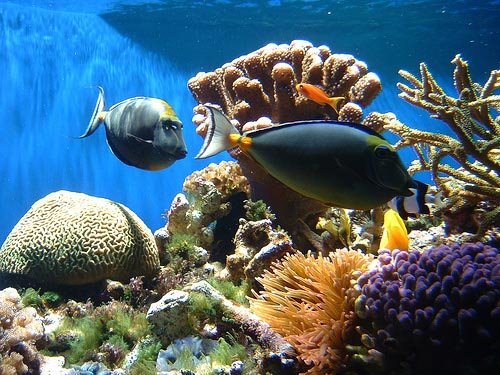
Marine Fauna The key attractor to the magnificent Ningaloo Marine Park is the abundance of unique, colourful marine fauna among the sea of corals. Schools of rainbow fishes swimming in spirals around you. It is a chance you do not want to miss. The amount of marine life at Ningaloo may not be as many compared to the Great Barrier Reef, but the concentration here is much more. That is what makes Ningaloo such a unique place. Some of the marine life (most attractive and exotic to Ningaloo) found along the coast are: 1) Whale sharks (Rhincodon typus) The whale shark, is a slow-moving filter feeding shark , the largest living fish species. The largest confirmed individual was 12.65 metres (41.50 ft) in length and the heaviest weighed more than 36 tonnes (79,000 lb)... CLICK to read more on the Australian Environment website. 2) Damselfish (Pomacentridae) Very conspicuous small fish, which can form large plankton-eating schools. Often hide in coral. Some damsel fish cultivate a patch of algae, which they guard zealously. CLICK to read more on the Live Aquaria website. 3) Wrasse (Labridae) Very colourful and conspicuous group of fish. Easily recognised by shape and bird like way of swimming. Most wrasses are capable of female to male sex change. CLICK to read more on the Australian Museum Website. 4) Butterfly fish(Chaetodontidae) Exquisite colour patterns and graceful appearance. Perhaps the best known of reef fish. Most species feed partly or exclusively on live corals. Often seen in pairs, which are permanent life time bonds. CLICK to read more on the National Geographic Website. 5) Angel fish(Pomacanthidae) Close relative of the butterfly fish and equally as beautiful. Feed on sponges and small invertebrates. Large angel species produce loud drumming noise when agitated. CLICK to read more on the A-Z animals website. 6) Cardinal fish(Apogonidae) The nocturnal counterpart of the damselfish in terms of sheer abundance. At night actively feed on small shrimps and crabs. Males incubate the female's egg masses in their mouth, every so often spitting them out to aerate them and then slurping them back in again. CLICK to read more on the Australian Museum website. 7) Parrot fishes(Scaridae) Close relative of the wrasses and one the dominant algae feeding families Juveniles and females are generally drab in colour compare with the gaudily coloured terminal phase males. Again sex change occurs from female to male. These fish consume considerable amounts of coral rock while feeding. It is ground to a fine powder by special teeth in the back of its throat and voided in the faeces. CLICK to read more on the National Geographic Website.
8) Manta Ray (Manta birostris) The Manta Ray is the largest species of ray in the world. Disc widths have been reliably measured up to 6.7 m, but this species possibly grows up to 9.1 m disc width. CLICK to read more on the National Geographic Website. 8) Black-tip reef shark (Carcharhinus melanopterus) The Blacktip Reef Shark gets it's common name from the distinct black tips of the first dorsal fin and lower caudal fin lobes. It is found in shallow marine waters around coral reefs and is not considered dangerous to people due to its small size. CLICK to read more on the National Geographic Website. | 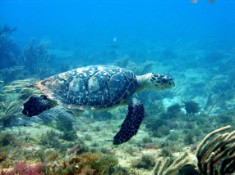 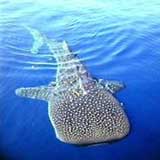 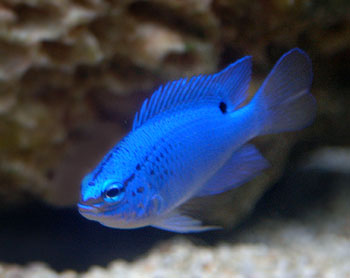 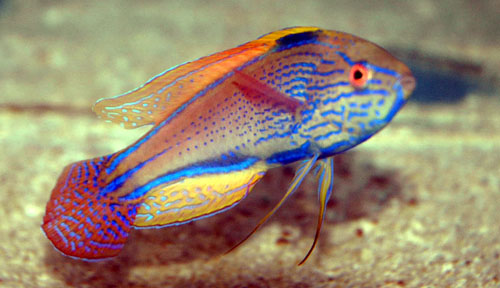 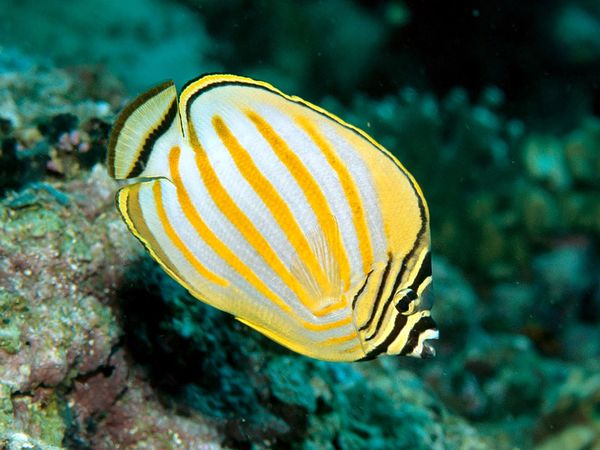  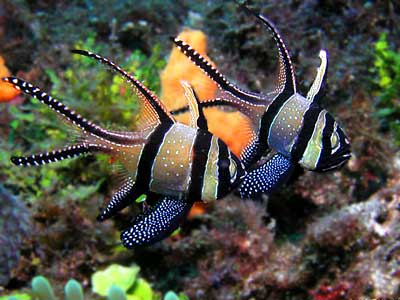 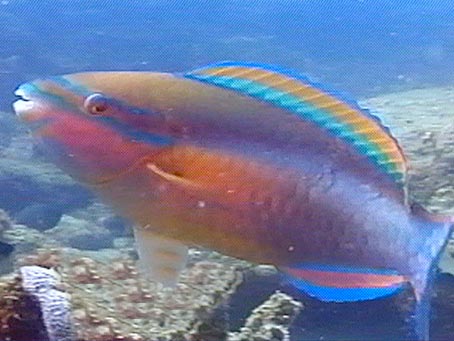 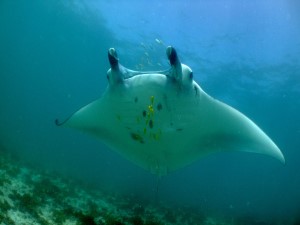 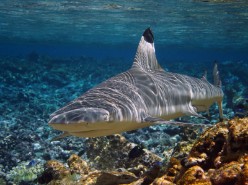 |
Marine Flora
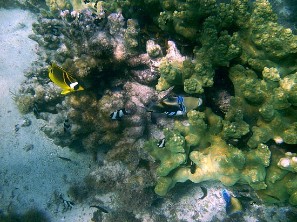
The Ningaloo Coast Marine park is renowned for its reputation of being the largest and longest fringing coral reefs in the world. With less than 50 metres from land, it is perhaps the perfect place for divers and snorkelers. The enormous stretch of corals covers a distance of 250 km and an area of around 600 000 squared hectares. In the prestige reef area, there are many exotic coral species that are only found at Ningaloo. Being one of the most colourful coral reef in the world, the coast attracts not only tourists but also reef fish, large mammals and most importantly, reputation of being one of the finest reefs.
 |  |
With over 300 species of corals and over 1000 species of marine algae, some of the more colourful and rare coral reefs are listed below:
1) Cabbage Coral (Montipora foliosa) The Cabbage Coral is a plate Montipora. It typically grows in colonies of thin plates without upright branches forming on the surface. CLICK to read more on the Animal World Website. 2) Brain Coral (Lobophyllia hemprichii) The Brain Coral is a large polyp stony coral often referred to as a Lobed, Colored, Carpet, Flat, or Open Brain Coral, Meat Coral, Modern Coral, or Large Flower Coral. It has fleshy polyps that hide its calcareous skeleton. CLICK to read more on the Live Aquaria Website. 3) Lavender/ Purple Coral (Acropora cerealis) The Cerealis Acropora Corals are beautiful species that will vary in coloration from solid, to different shades of purple. It is a relatively uncommon color for any hard coral. CLICK to read more on the Live Aquaria Website. 4) Sun Coral (Tubastrea aurea) Sun Corals are members of the brightly colored Large Polyp Stony corals, also known as Sun Polyps. The Tubastrea Coral have a skeleton structure that is tubular, with stars at the tip of each tube. They are extremely vibrant colored and are often found as orange, yellow or black CLICK to read more on the fresh Marine Website. 5) Staghorn Coral (Acropora sp) Staghorn corals are one of the most important reef building corals. Hard corals build reefs by growing on the stony skeletons of previous coral colonies. The reef is made from the limestone cases made by coral polyps extracting calcium from seawater. CLICK to read more on the Australian Wildlife Website. | 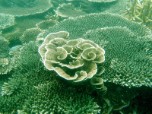 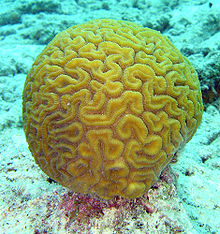 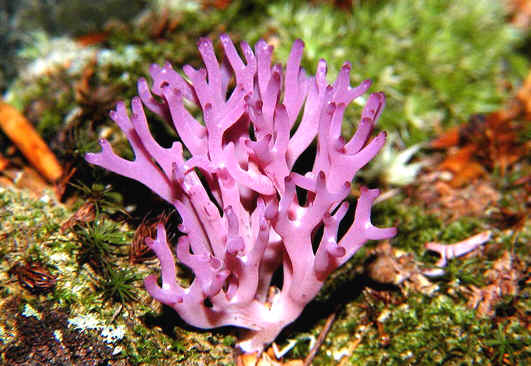 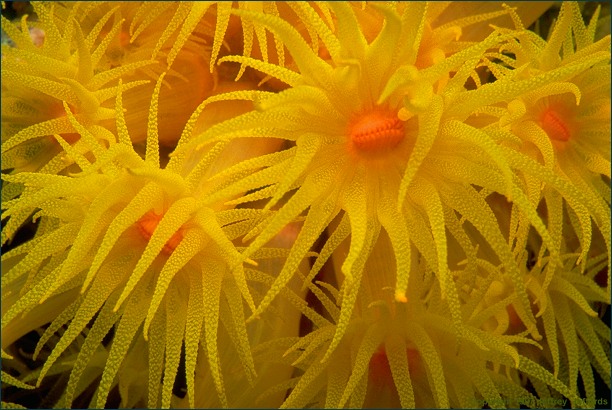 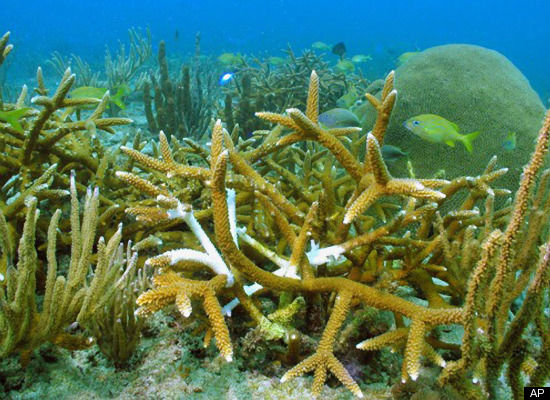 |
Coastal Fauna
1) Black-footed Rock Wallaby (Petrogale Lateralis) The Black-footed Rock-wallaby is reddish brown above with paler underside. The fur is thick and feet are dark. It has a distinct white cheek stripe. Tail is dark is brown with brush at end. CLICK to read more on the Australian Wildlife Website.
2) Blind cave eel (Ophisternon Candidum) This species is known only from subterranean waters of the Cape Range Peninsula in the arid NW of WA. CLICK to read more on the Australian Government Website. 2) Blind Gudgeon (Milyeringa Veritas) The Blind Gudgeon is a small fish growing to 4.5 cm, generally white, but sometimes slightly pink in colour. This species is known to occur on the Cape Range Peninsula in the arid NW of WA. CLICK to read more on the Australian Government Website. 3) White Tern (Gygis Alba) The White Tern is a small, all white tern with a long black bill, related to the noddies. It ranges widely across the Pacific and Indian Ocean, and also nests in some Atlantic islands. It nests on coral islands, usually on trees with thin branches but also on rocky ledges and on man-made structures. CLICK to read more on the Australian Government Website. | 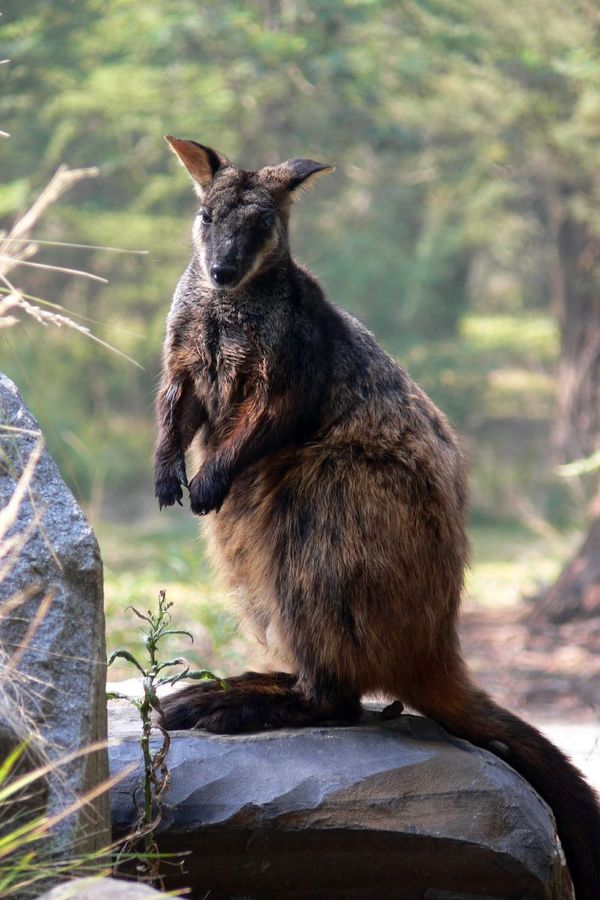  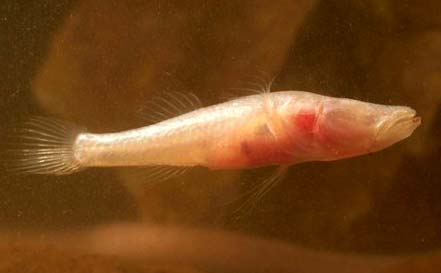 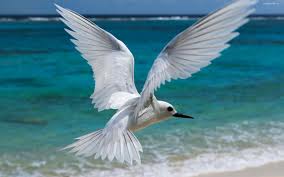 |
1) Millstream Fan Palm (Livistona Alfredii)
The millstream palm is one of the largest and tallest palm trees in the world. It is only found in Australia and has only been seen around the Ningaloo and Cape Range National Park Area. CLICK to read more on the Australian Government Website. 2) Carnarvon Xeric Scrub The Carnarvon Xeric Scrub area is home to many endangered speciees of flora and fauna. These include the Rainbow bee-eater, ghost bat and many more. CLICK to read more on the World Wildlife Fund Website. | 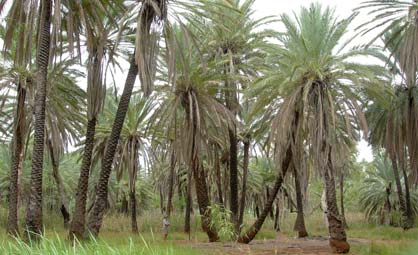 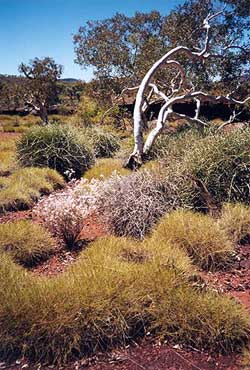 |
Other Unique features of Ningaloo
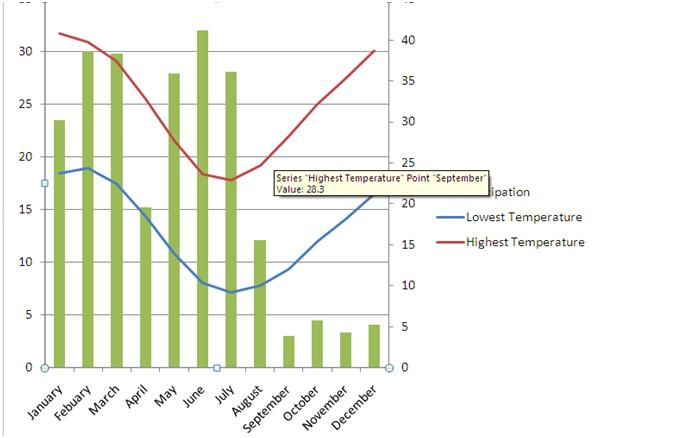
Wondering how such attractive stretch reefs can exists within an inhospitable environment of the Western Australian desert? This is all due to the unique weather pattern in the Ningaloo area. The Ningaloo area is located 300 km North of the Tropic of Capricorn. This position is situated in the transition zone between tropical and temperate latitudes resulting in even warm temperatures. The Ningaloo reef and coral bay are located in the best spots as it is one of the best‑positioned reefs in the world to survive ocean warming and sea‑level change. Due to its peculiar location within the tropics and temperate region, it contributes significantly to its uniqueness.